An internal sales app for a home textile manufacturer that sells locally, to retail chains, and for export. We designed and built it: one catalogue that sets every price, one form for every sale, and a dashboard that answers how the business is doing for any channel and period.
- Client
- Name withheld
- Sector
- Home textile manufacturing
- Product
- Internal sales app
- Our role
- Design and development
- Language
- Albanian
- Access
- Four roles
- Published
- 2026
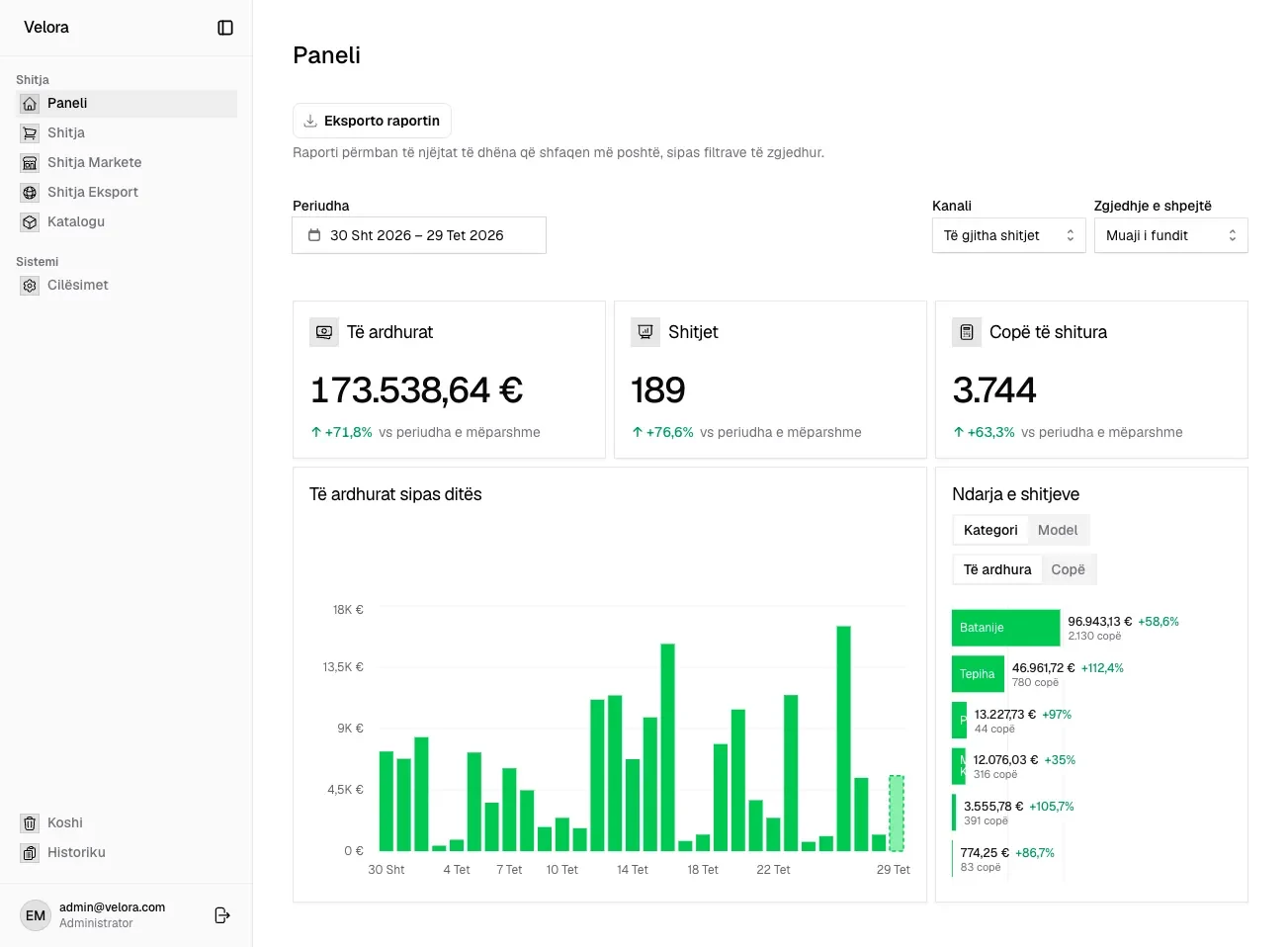
Three ways of selling, one set of numbers.
The manufacturer sells from its own shop, to named retail chains and markets, and abroad to buyers in several countries. Several people record those sales, and the owner needs to know, for any week or month, what came in, through which channel, and which products sold. The app had to make recording a sale quick and hard to get wrong, and make the numbers readable without a spreadsheet.
Three channels. Local sales, sales to a named market, and export sales to a country each keep their own list, and the dashboard reads them together or apart.
Three ways to price. Carpets are sold by the square meter, some textiles by the meter, and the rest by the piece.
Four roles. An administrator, managers, sales representatives who see only their own sales, and an auditor who can read everything and change nothing.
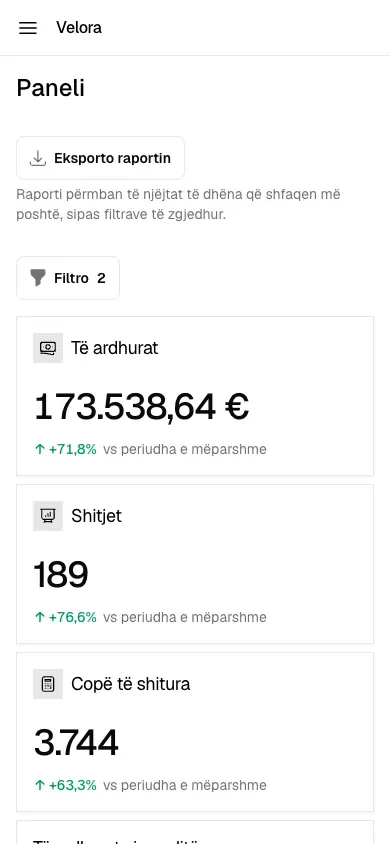
Three rules for every screen
The catalogue sets the price. A sale is built from the catalogue, so nobody types a price by hand.
Every figure has a comparison. A total is shown beside the same span of time before it.
Nothing is lost by mistake. Deleted records wait in a trash for 30 days, and changes are kept in a history.
The decisions behind the ledger
Four choices shaped how the team records sales and reads them back, each shown on the screen it shaped.
One dashboard for every channel. The dashboard opens on three totals: revenue, number of sales, and pieces sold. A channel switch reads local, market, or export sales, or all three, and quick periods such as the last month sit beside a date range. Each total is compared with the period of the same length before it, and the breakdown ranks categories or models by revenue or pieces.
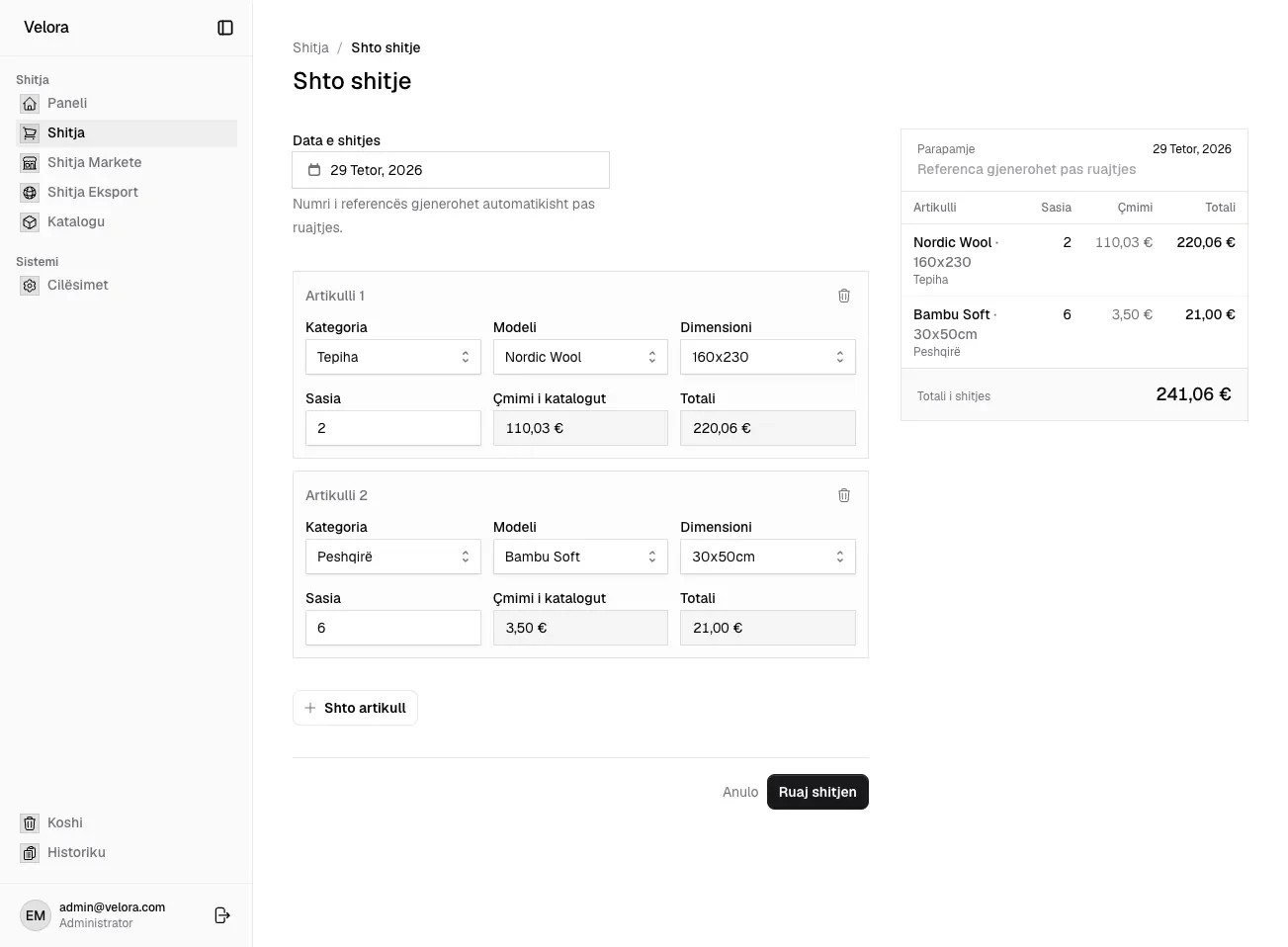
Build every sale from the catalogue. A sale is a list of lines. For each one the seller picks a category, a model, and a size, and enters a quantity. The price comes from the catalogue, worked out from the model’s price per square meter and the size, and a preview of the invoice updates beside the form. The reference number is assigned when the sale is saved.
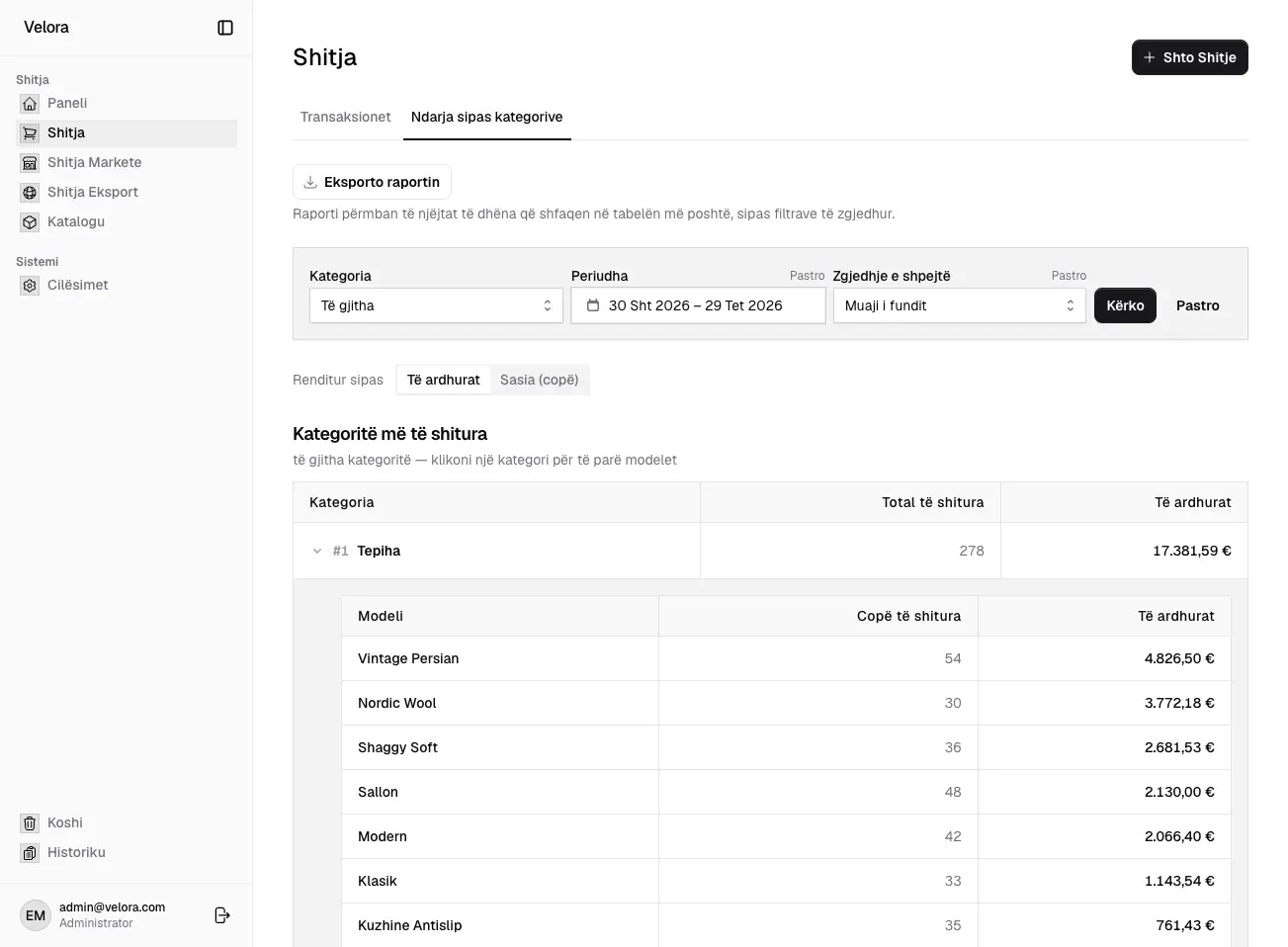
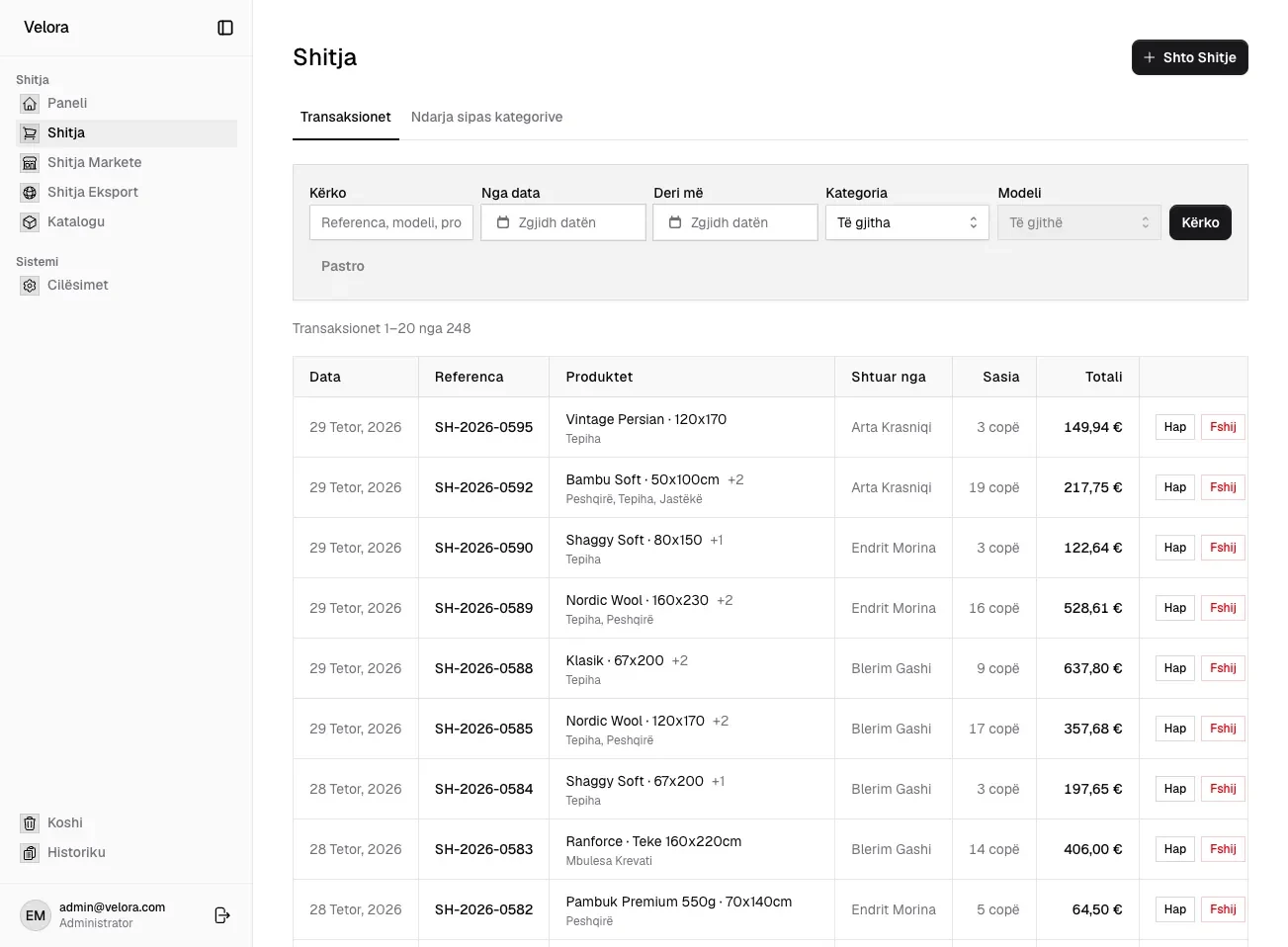
Rank categories, then open them into models. The most common question is what sold. Each sales list has a breakdown tab that ranks categories for the chosen period, and a category opens into its models in the same table. The ranking switches between revenue and pieces sold, and the same view exports as a spreadsheet with the filters in place.
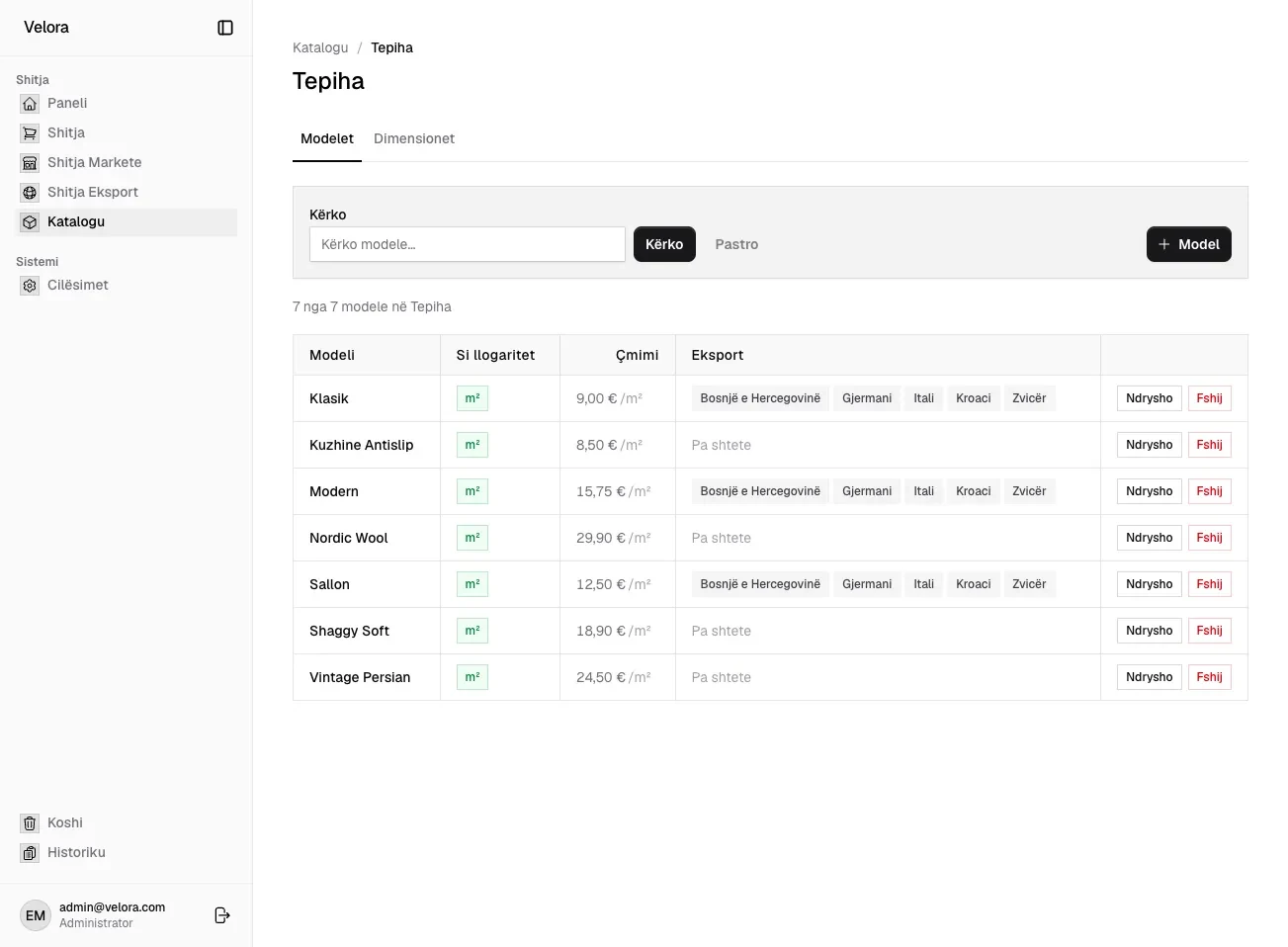
Price each category the way it is sold. Carpets are priced per square meter, so one model price covers every size. Other categories are priced per piece or per meter. The catalogue sets the pricing method for each category, a price for each model, and the countries each model can be exported to.
A quiet interface for daily work
The app is used all day by the same people, so it stays out of the way: white and near-black, a light grey sidebar, and one green for charts, selection, and growth. Tables and forms share one square, bordered style, so a list of sales and a new sale look like the same document.
Revenue, last month, all channels
Everything is set in Geist, in a few sizes. Large figures on the dashboard use the same face as the tables, so a total reads like the sum of the rows below it.
Square, bordered controls with labels above them. The primary action is near-black; green is kept for data.
The finished journey, screen by screen
These are the actual screens of the app, shown with demo data under the stand-in name Velora. Select a step to see it.
Screen from the app, with demo data.
Built for the people who use it every day
The details that do not show in a screenshot, but decide whether the numbers can be trusted.
Access enforced by the database. Roles are checked by row-level security, not only hidden in the interface. A sales representative’s account can read only the sales it recorded.
A trash and a history. Anything deleted can be restored for 30 days, and the history lists who did what and when.
The seller’s name is kept. Each sale stores the seller’s name as it was on the day, so renaming an account does not rewrite past sales.
Days end at the factory’s midnight. Every period is cut in the factory’s own time zone, so the screen and the exported spreadsheet always count the same days.