Arbër Ismajli ran for mayor of Gjilan in Kosovo’s 2025 local elections under the slogan “Bashkë për Fitore”. We designed and built his campaign website: the programme, a list of promises for each neighbourhood and village, a diary and photographs from the campaign, and simple ways for residents to report a problem or join the team.
- Client
- Arbër Ismajli
- Location
- Gjilan, Kosovo
- Sector
- Local election campaign, 2025
- Our role
- Design and development
- Language
- Albanian
- Status
- No longer online
- Published
- 2026
A city-wide programme, read street by street.
A mayoral programme covers a whole municipality, but a voter reads it for their own street, school, or village. The website had to carry a full four-year programme, show each neighbourhood and village what it would get, keep up with a campaign that produced news and photographs every day, and give residents something to do besides read.
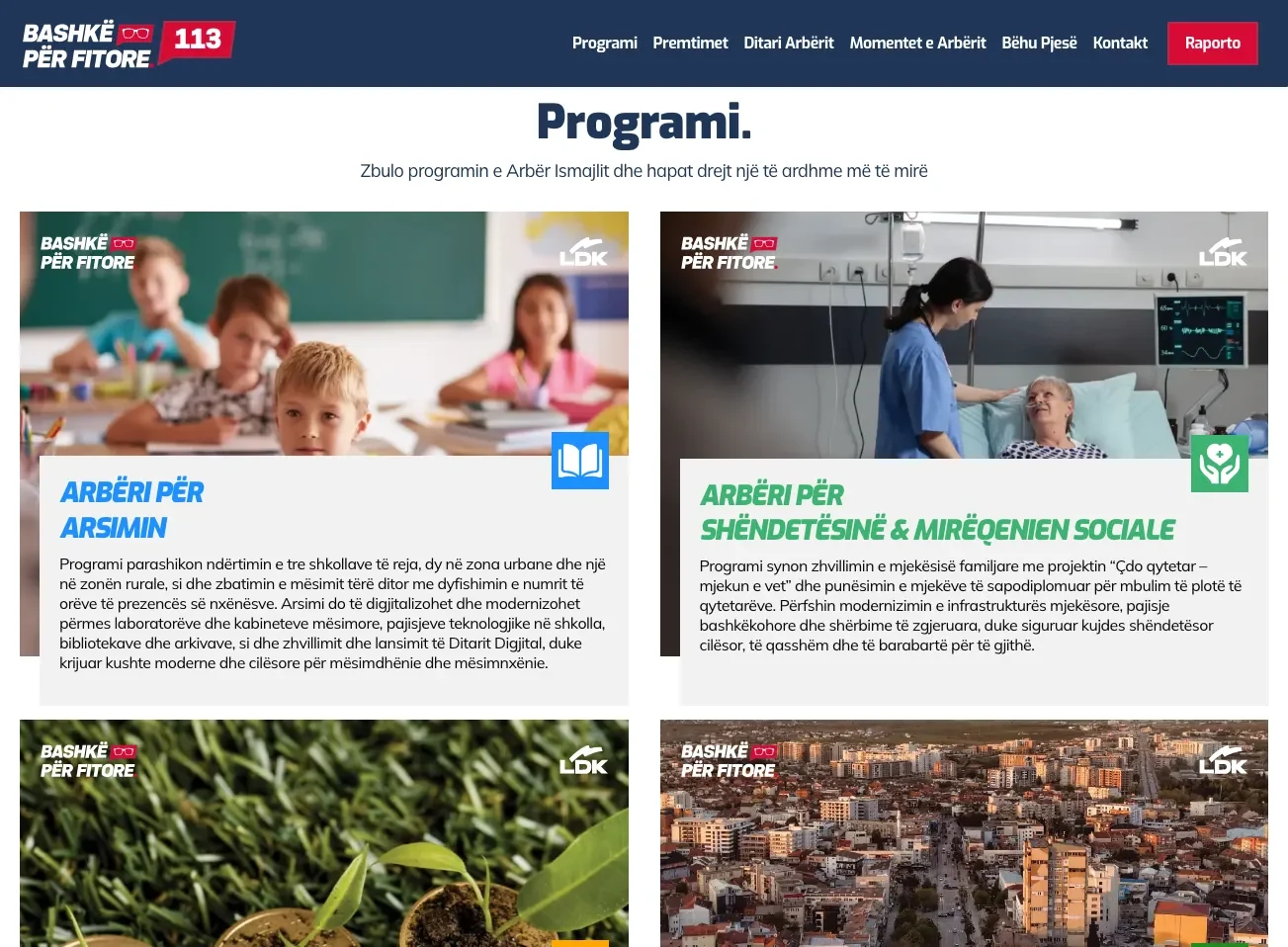
A four-year programme. Eleven areas, from education and health to the municipal budget, each with concrete projects.
21 places. Ten neighbourhoods and eleven villages, each with its own numbered promises.
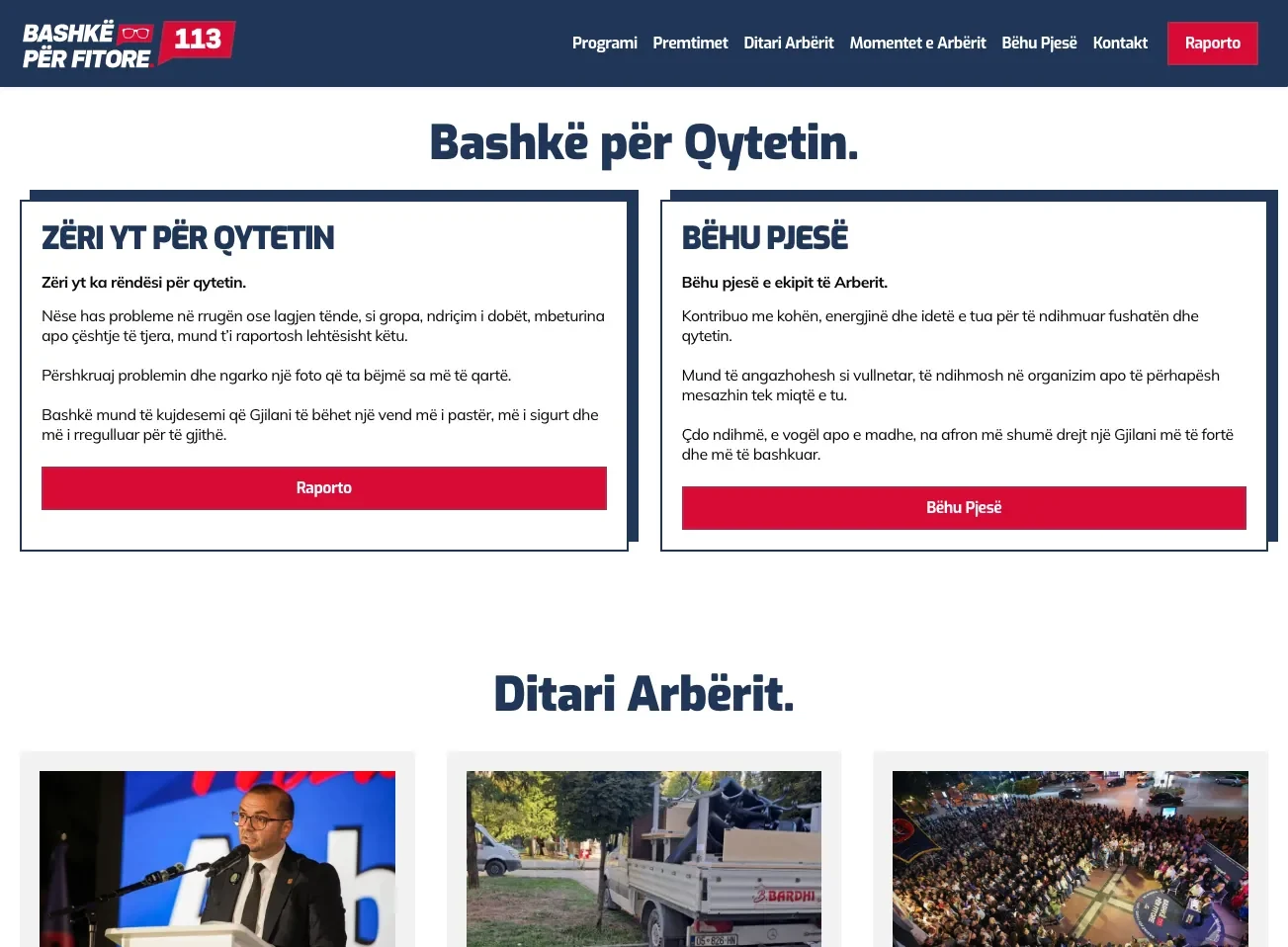
Three ways to take part. Report a problem, join the team, or send a request, a complaint, or a question.

Three rules for every screen
One message on every page. The slogan and the ballot number 113 sit in the header everywhere.
Local before general. Promises are listed by the place they are made to.
Every visit can lead to action. Reporting a problem is one button away on every page.
The decisions behind the campaign
Four choices shaped how voters met the campaign, each shown on the screen it shaped.
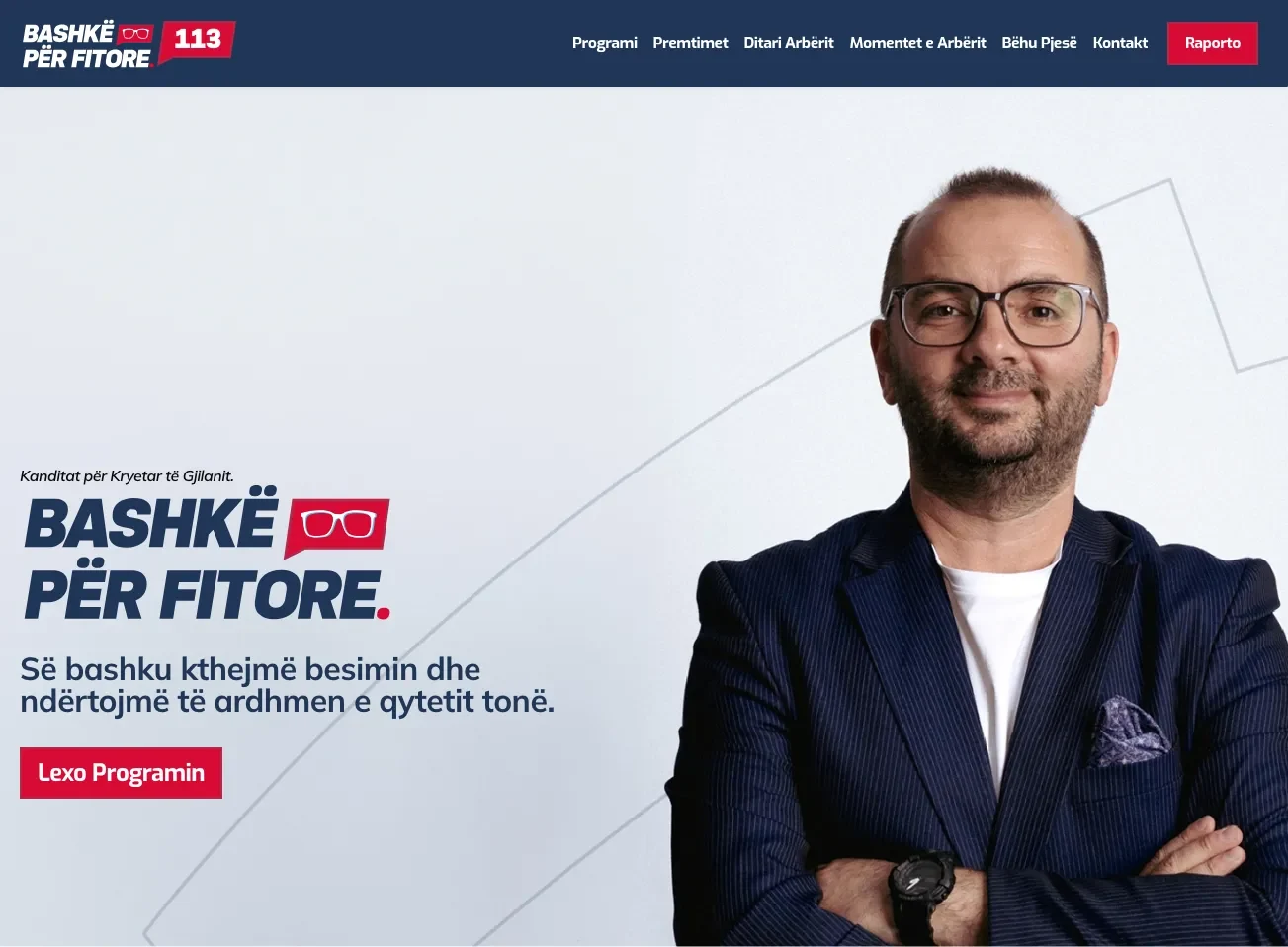
Open on the candidate and the slogan. The homepage opens on a portrait of Arbër Ismajli beside the office he was running for, the slogan “Bashkë për Fitore” set in heavy, slanted Exo, and one action: read the programme. The logo carries the ballot number, 113, so it appears at the top of every page.
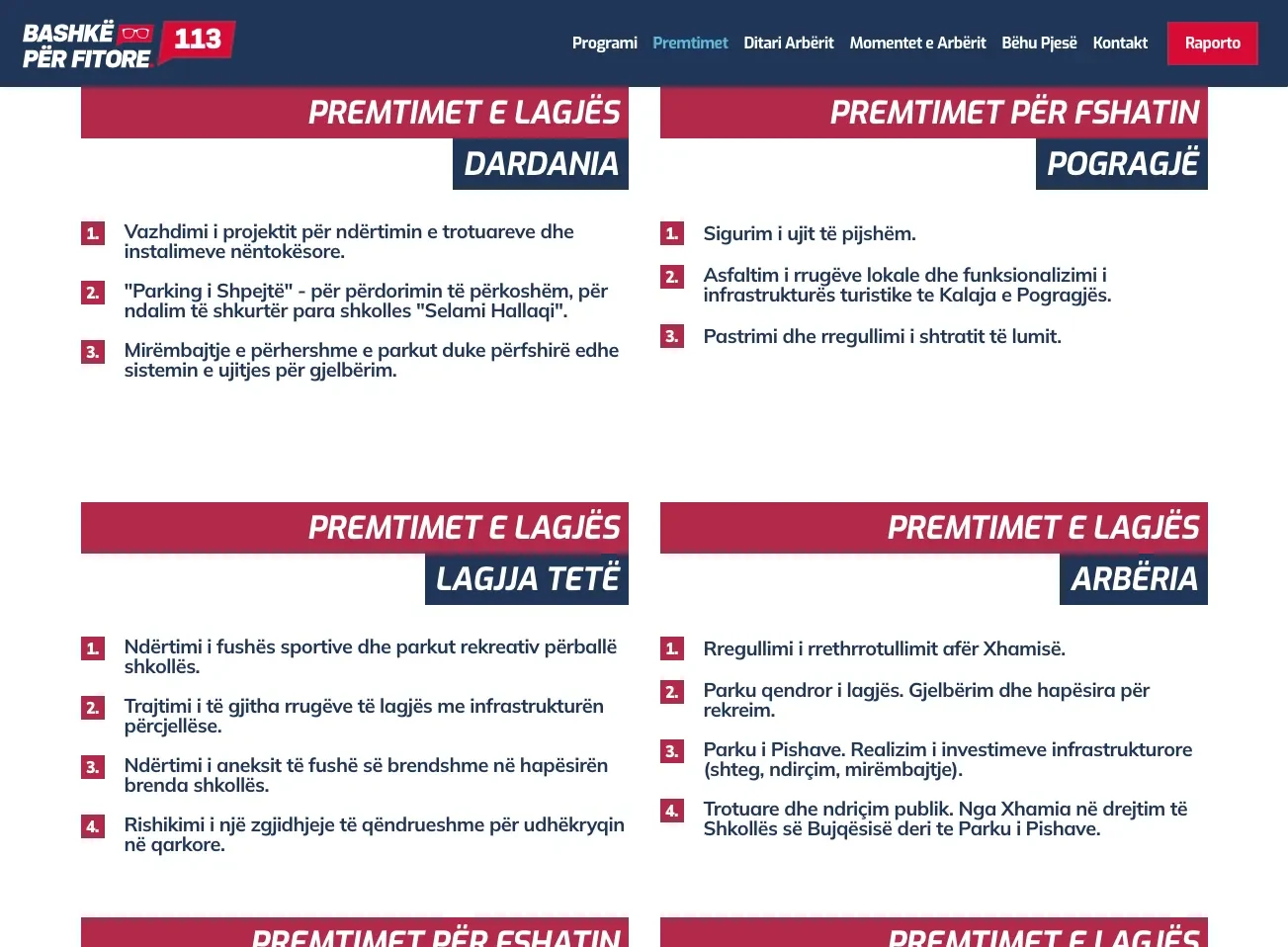
Promise each place something specific. The promises page gives each of 21 neighbourhoods and villages its own block, labelled as a neighbourhood or a village and named in a dark tag, with three to five numbered promises: a pavement, a water supply, a park, a road to be asphalted.
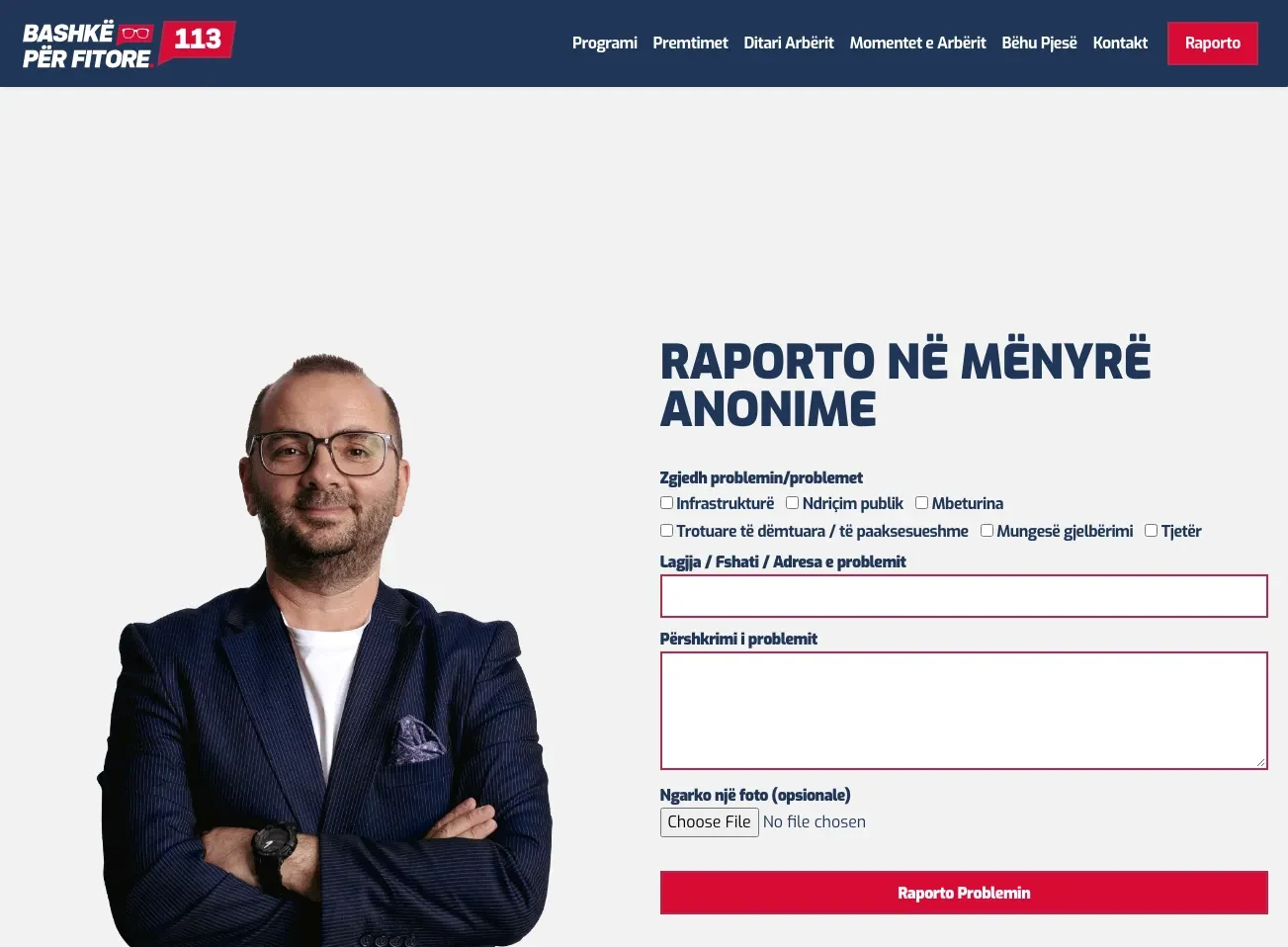
Let residents report a problem anonymously. Raporto sits in red at the end of the main navigation on every page. The form asks for no name or email: a resident ticks the kind of problem, such as lighting, waste, or damaged pavements, gives the place, describes it, and can add a photo.
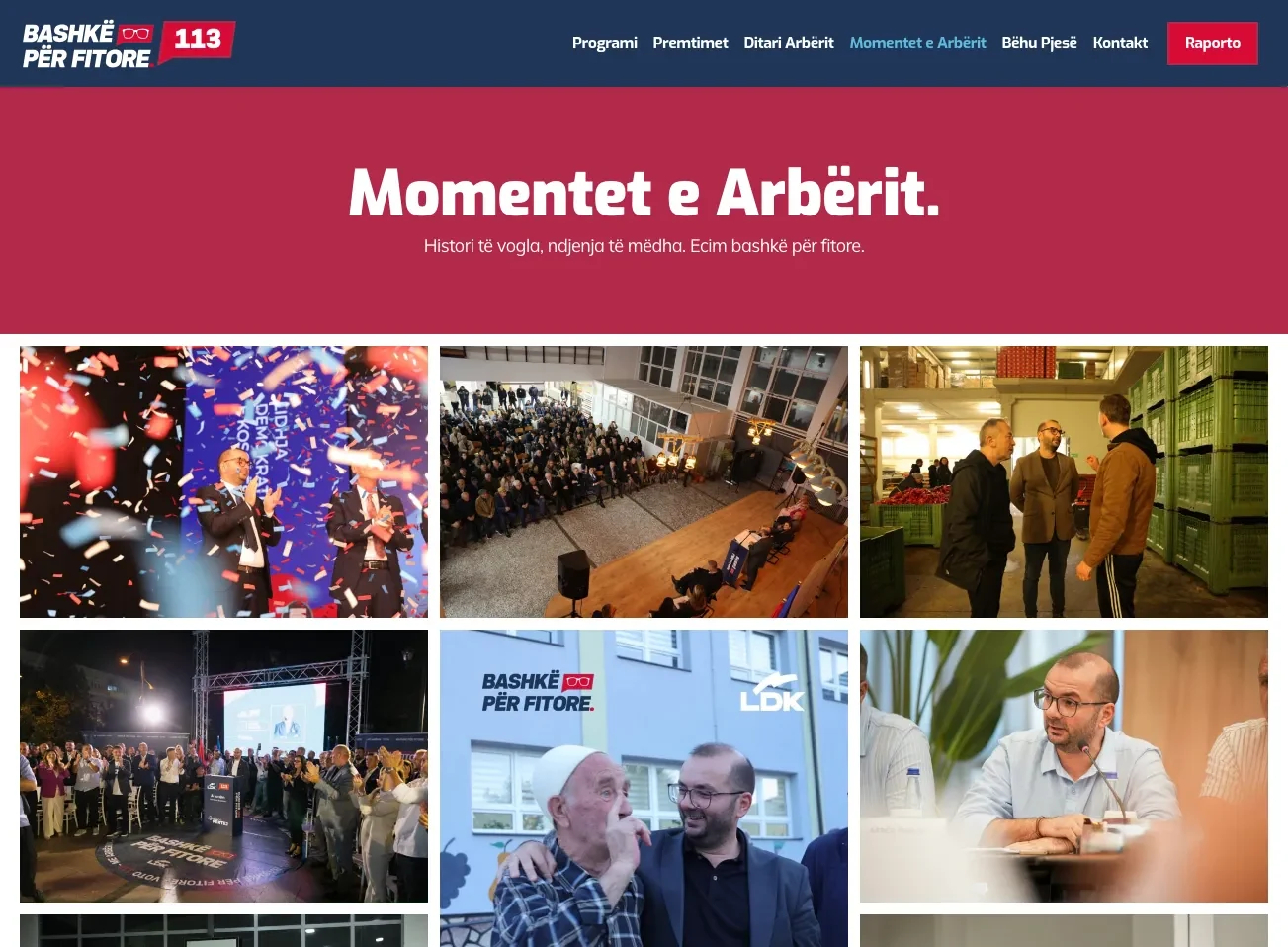
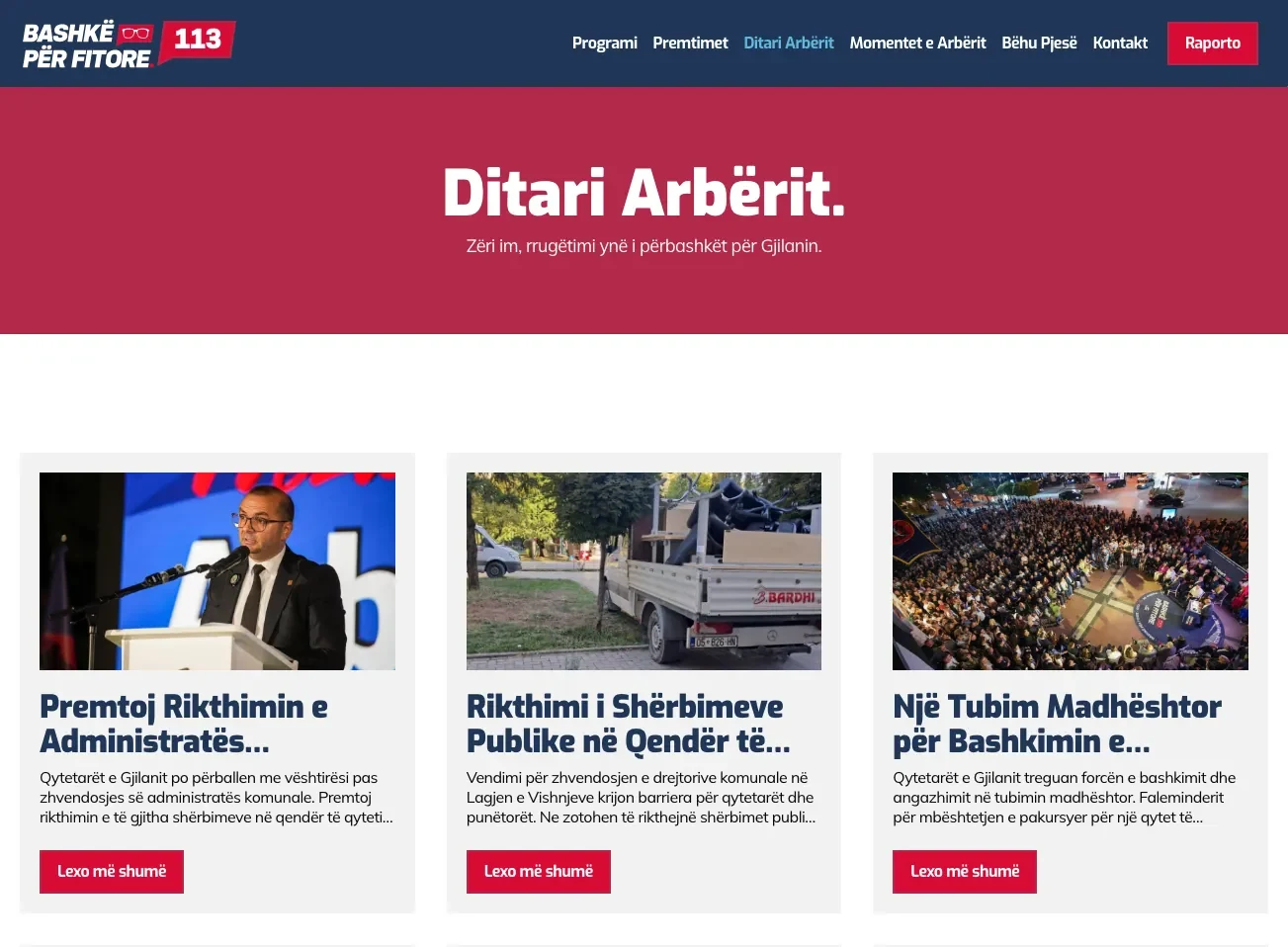
Keep the campaign on the website, not only on social media. Two pages follow the campaign as it happens. Ditari Arbërit is a diary of short articles on positions and events, with the latest three on the homepage. Momentet e Arbërit is a page of photographs from rallies, meetings, and visits.
Designed in the campaign’s own colors
The campaign’s navy and red carry every page: a navy header and footer, red for actions and the ballot number, and a deeper red for page titles. Headings are set in a heavy, slanted Exo that matches the logo, so the website reads like the posters.
Headings, buttons, and labels are set in Exo, slanted for the slogan and section labels. Body text uses Mulish, a quieter sans serif for long programme text.
Square red buttons with white Exo labels, and place names in navy tags under red bands.
The finished journey, screen by screen
These are the actual screens of the campaign website, captured from our copy because it is no longer online. Select a step to see it.
Screen from the campaign website.
Built for a campaign
The details that do not show in a screenshot, but decide whether a visitor can take part.
Edited by the campaign team. Built on WordPress with Elementor, so diary posts and photographs are added from the WordPress dashboard.
Joining by place. The join form asks for a name, an email, and a phone number, with the neighbourhood or village as optional fields.
Contact by reason. The contact form starts with why someone is writing: a request, a complaint, or a question.
Fonts served by the website. Exo and Mulish are served from the website itself rather than loaded from Google.